

Letting go: Why holding onto grudges can be damaging
Journalist Meredith Lepore admits it: She really can hold a grudge. She says her typical grudge can last five to seven years – or even longer! She felt snubbed when 12 years ago friends didn’t give her a bigger role in organizing a bachelorette party.
“I don’t think I ever planned a bachelorette party after that,” Lepore said. “There was too many cooks in the kitchen, and I didn’t like that.”
In her twenties, she took offense when a roommate yelled at her for locking herself out of their apartment. Is she still made at her? “I would have a drink with her, but I would never call her a friend,” Lepore said.
CBS News 
But the granddaddy of her many grudges centers around – of all things – a birthday cake back in college: “My parents had sent me a birthday cake. So, I put the birthday cake in the fridge one night, and then the next morning it was gone. Somehow we figured out that a boy had taken it late at night – he was, like, telling people about it, and, like, boasting about it.”
Asked if she’s still mad about that (“It was a nice cake!”), Lepore replied, “I’ve held that one for a long time. I think now I’m over it!”
Lepore says she comes by her grudge-holding honestly. “My father – nicest guy, a brilliant doctor, you know, kindest bedside manner – we’ve always joked that he was gonna write a book called ‘Grudges I’ve Had,’ you know, just about lifelong grudges.”
So, it runs in the family? “Yeah. I think it does,” Lepore said.
Asked about other traits that she thinks leads her to become more inclined to grudges, Lepore replied, “I am a sensitive person. I think some people are much better at letting things roll off their shoulders.”
“It’s very childlike”
Grudges are incredibly common, with one survey finding four out of five adults (78%) harbor some lingering resentment, with the average holding seven grudges at the same time.
Psychotherapist Nancy Colier (author of the upcoming book “Narratives: Let Go of the Stories That Keep You Stuck”) says, in her practice, she sees patients holding grudges every day. “It is absolutely remarkable to me how small, small events can become just enormous, poisonous hives inside of someone,” she said.
New Harbinger Publications 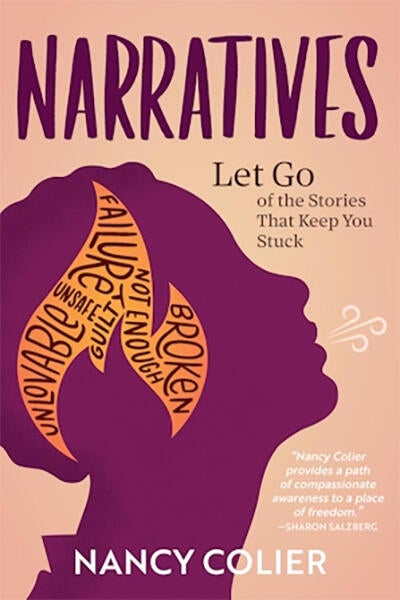
And those hives, says Colier, can buzz for decades: “I am working with one person who is holding on to a grudge against a high school friend – this a person in her fifties – over a scuffle to do with a boy when they were 17. She’s still furious, still walking around angry.”
But all of this is counterproductive. “We’re lighting ourselves on fire, and expecting the other person to die of smoke inhalation,” Colier said. “We have this misguided idea that we’re punishing the other person.”
According to Harvard epidemiology professor Tyler VanderWeele, “Unforgiveness is essentially like drinking a poison and hoping the other person dies. It doesn’t work.”
VanderWeele says, whether held for a day or a decade, grudges are just bad for us: “Studies indicate greater levels of cardiovascular trouble, higher levels of depression, higher levels anxiety.”
Yet, we live in an age where brazen airing of a grudge, once frowned upon, now seems almost expected. “There are multiple reasons for this change,” VanderWeele said. “One of them is the public nature of the grudges that are now possible through social media. Some of it also is an abandonment of discussions of character and what good character looks like and what good character requires.”
It also seems to be in fashion politically, with politicians now wearing their grudges on their sleeves. According to Colier, “It’s very childlike.”
So, how to rid yourself of a grudge? At Harvard’s Institute of Human Flourishing, Vanderweele focuses on one word: forgive.
“Forgiveness is the letting-go of a grudge, the replacing of ill will towards an offender with goodwill,” he said. “It’s not all that needs to take place to provide restoration and reconciliation, but I do think it’s always appropriate. Have goodwill, even when one’s been hurt.”
“Anger becomes like a sickness”
Author Immaculée Ilibagiza is living proof of the incredible power of forgiveness. She lost most of her family to the Rwandan genocide. Ilibagiza survived by hiding in a tiny bathroom with seven other women for three months.
Asked what that experience did to her spirit, Ilibagiza replied, “My goodness, I was fighting with God. I was asking him questions. I was angry.”
CBS News 
But somehow, she learned to let go of that rage when she realized it was harming only her. According to Ilibagiza, when you are angry you are married to your enemies. “Anger becomes like a sickness. It becomes like an obsession,” she said.
Today, Ilibagiza, whose experience might justify holding a grudge against all of humanity, instead tours the world preaching forgiveness. VanderWeele said, “Examples like that are incredibly profound, and I think demonstrate the power and the freedom that forgiveness can bring.”
So, Nancy Colier says, we must deal with all grudges – whether large-scale like Rwanda, or mundane as a birthday cake – the same way: “Ultimately, your well-being cannot rely on anyone else changing, or doing anything for you. It cannot, or we’re hostage. The only way you’re going to feel well, find equanimity, is when you take ownership of your own well-being. Get them out of your story.”
READ AN EXCERPT: “Narratives” by Nancy Colier
In her latest book, the psychotherapist writes about how the stories we tell ourselves about ourselves can hold us back from living a more truthful and connected life.
Story produced by Amiel Weisfogel. Editor: George Pozderec.
For more info:


