

Extreme weather is already a huge threat to homeowners. Which U.S. states are most at risk?
Storm clouds are rolling in on the U.S. housing market, with new data projecting a sharp increase in financial losses linked to extreme weather in the coming years.
That’s the upshot of a new report from Cotality, released Wednesday, which explores the states most vulnerable to extreme weather. The property data and analytics company also calculated the financial losses, already in the billions for 30 states, and how they are expected to grow by 2050.
“When people think of extreme weather, they usually think of places like California, Texas and Florida, but the most severe concentrations of risk aren’t always where you’d expect,” said Dr. Howard Botts, chief scientist at Cotality.
Homeowners face fresh challenges as climate change accelerates the frequency and severity of storms. Flooding, hurricanes and severe convective storms are expected to drive the most financial losses across the country in the coming decades, according to Cotality.
At the same time, insurers are increasing premiums and, in some cases, exiting high-risk markets altogether, leaving some homeowners more exposed.
Which states face the highest overall risk?
Cotality ranked states using a risk-scoring model that measures the severity and likelihood of extreme-weather perils. According to the findings, homes are most exposed to severe storms in Louisiana, a state intimately familiar with the damage extreme weather can unleash following Hurricane Katrina.
Louisiana already sees $6.7 billion in average annual losses from extreme weather, mostly from hurricanes, according to Cotality. By 2050, those losses will jump to $11.4 billion, largely due to increased inland flooding, the research firm projects.
Mississippi and Florida are the next two most vulnerable states due to their exposure to hurricanes. Cotality estimates that total losses in the housing market from extreme weather in the two states will swell by around 62% and 54%, respectively, by 2050.
Even residents in states far from the coasts, such as West Virginia, are likely to face a greater toll from inland flooding, according to the analysis.
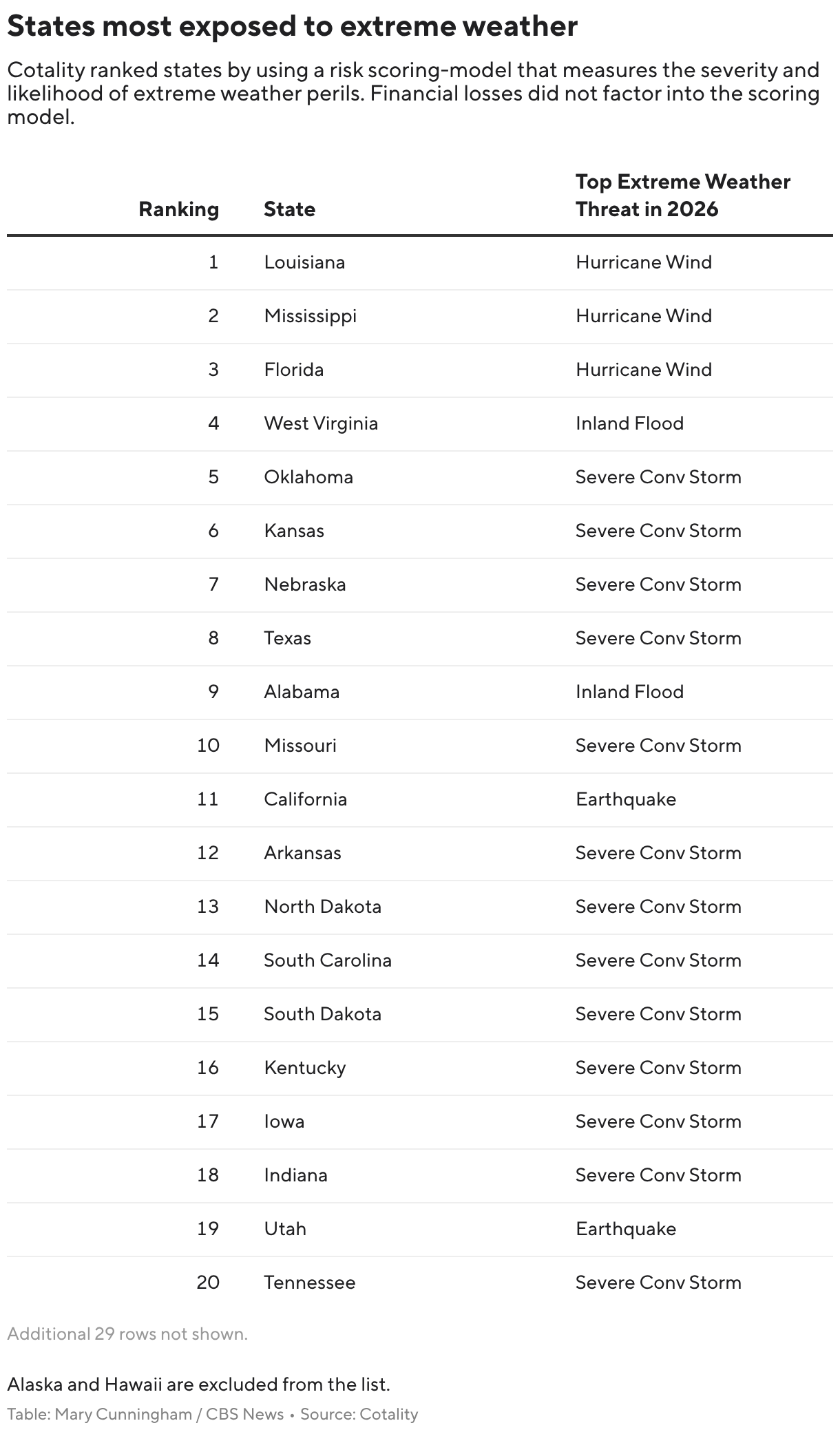
In its analysis, Coality estimated that the 10 least-exposed states to weather-related disasters will see losses increase by nearly 38% by 2050, compared to around 47% in the top 10 riskiest states.
“It’s important to remember that ‘low risk’ doesn’t mean ‘no risk’,” Botts said. “Every state has its own mix of perils and resilience, but wherever a state lands in our ranking, weather losses are projected to rise.”
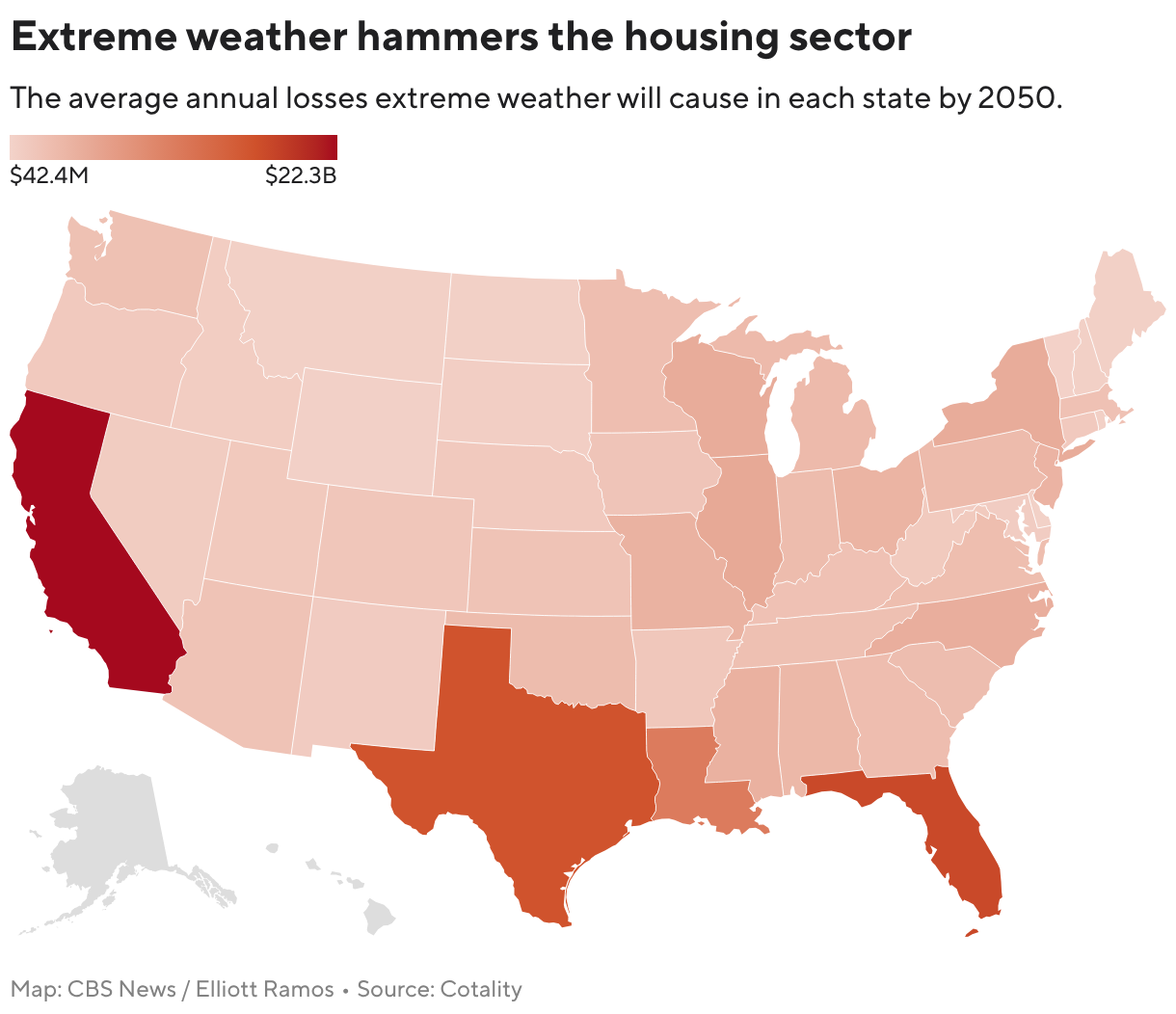
California and Texas currently top the list of states that have suffered the greatest financial drain from extreme weather, with average annual losses totaling $18.2 billion and $11.5 billion, respectively. By 2050, Cotality projects those losses will grow to $22.4 billion a year in California and to $16.5 billion in Texas.
Other research has also underscored the financial damage extreme weather can cause. In a separate report released earlier this year, climate risk modeling firm First Street found that severe convective storms — short-duration, high-impact weather events — have resulted in $794 billion in total insurance payouts over the last 25 years. That’s more than flooding, earthquakes and drought losses combined.


