

CBS News poll finds Iran conflict marked by feelings of uncertainty; most say it’s more difficult than Trump had expected
Across months of the Iran conflict, the public continues to express three main ideas:
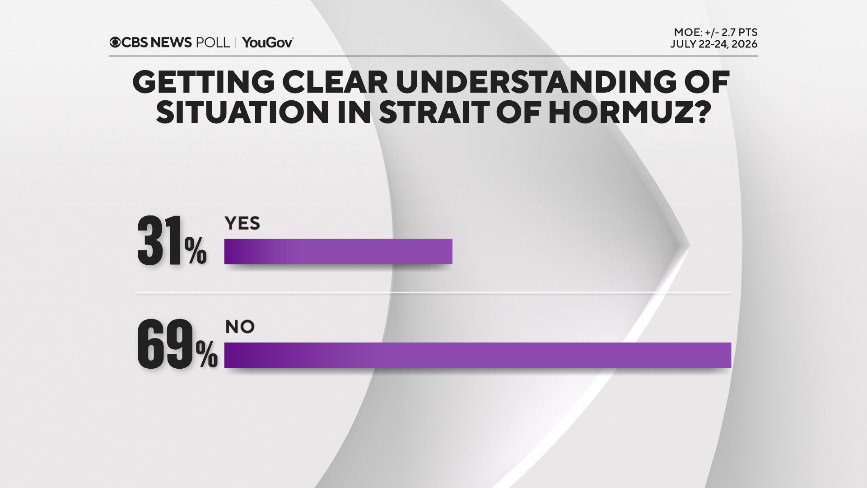
- A perceived lack of clarity about what’s happening day to day in the Strait of Hormuz.
- There are plenty of important goals the U.S. could seek, now that we’re in the conflict.
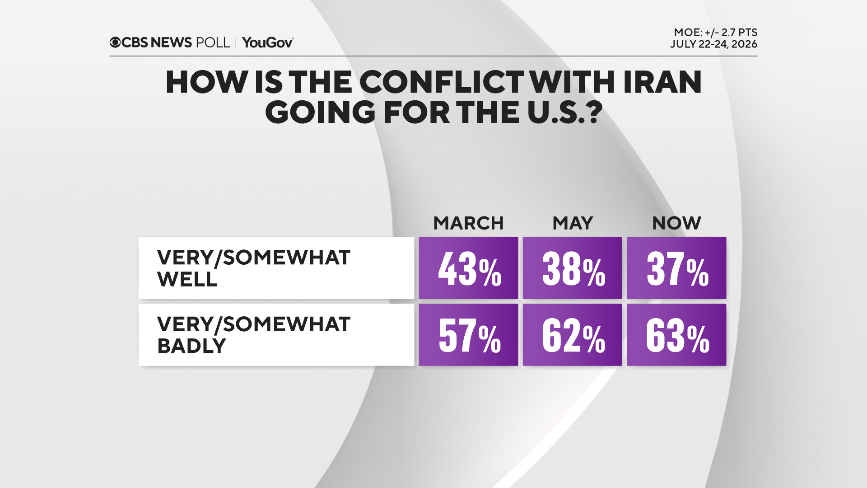
- The conflict is not going well.
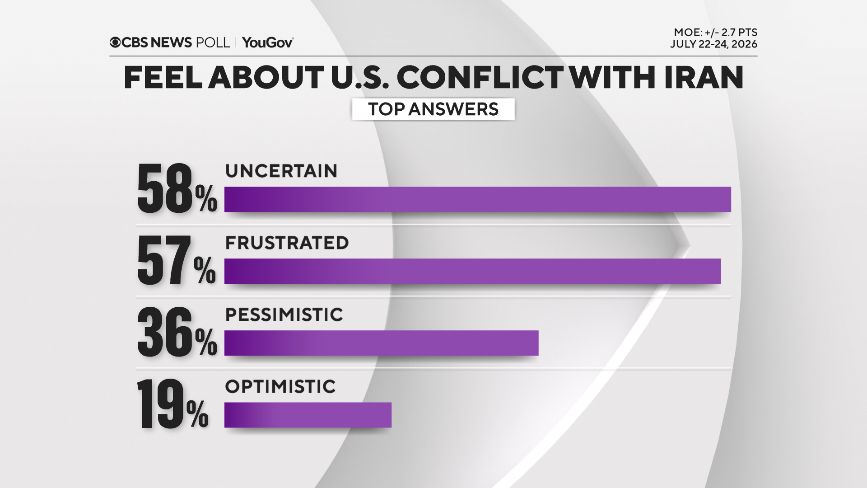
So today, as fighting escalates again, most Americans pick “uncertain” and “frustrated” as the top ways to describe their personal feelings about it.
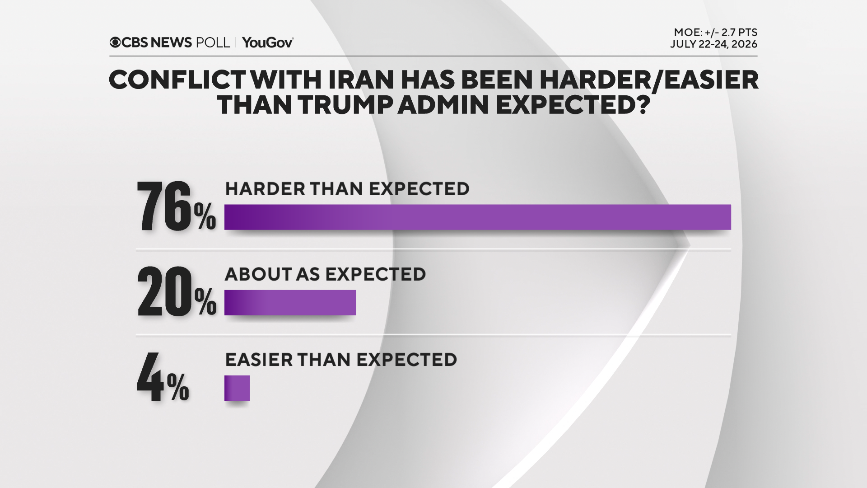
Either way, now most are expecting the conflict to take months or even years longer, with a big majority saying it’s been harder than the Trump administration anticipated.
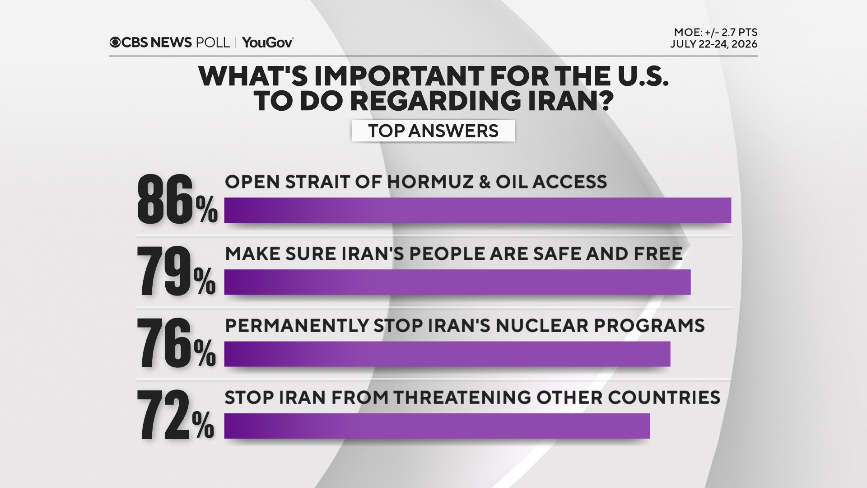
The public’s expressed goals have been consistent.
It remains important to most Americans to open the Strait of Hormuz (especially as gas prices rise back home), to stop Iran’s nuclear program and to stop Iran from threatening the region.
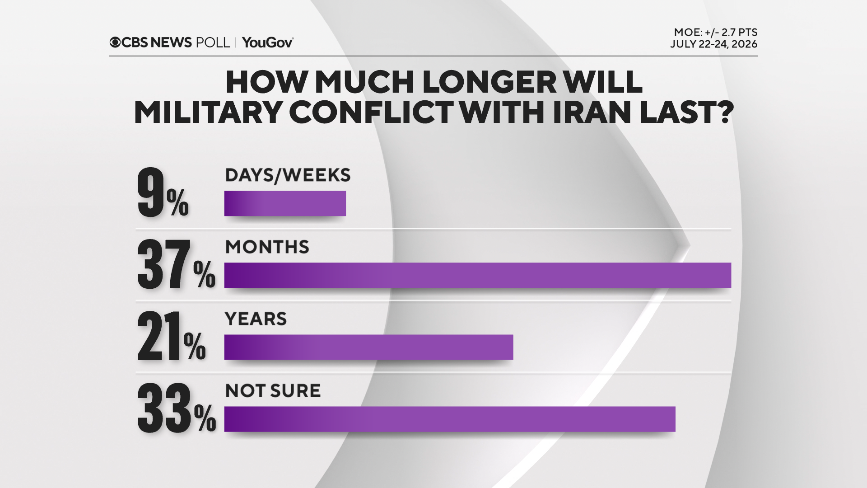
But that doesn’t mean people think it’ll be easy, and most suspect the conflict will last months or even years longer.
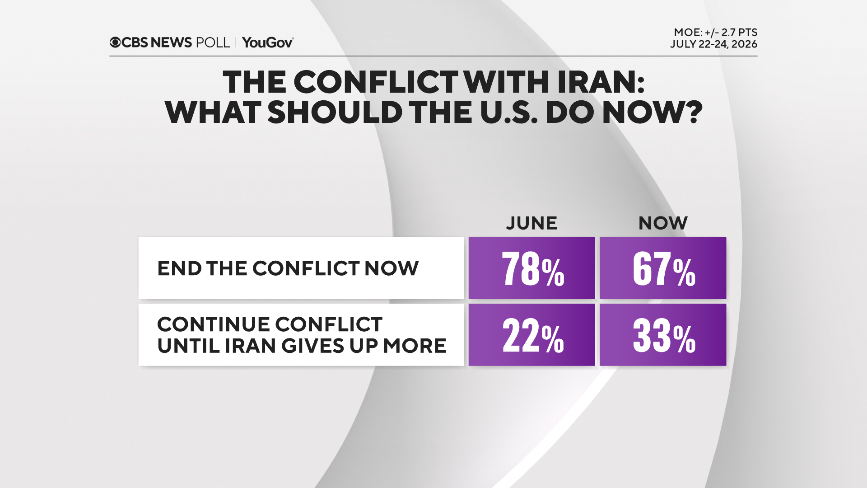
Given that, a preference for ending the war — as opposed to pressing for more concessions from Iran — remains the majority view.
But after the deal to end the war fell through, comparably fewer today want the U.S. to end it right now, a sentiment driven largely by Republicans. They largely said they backed the president on ending it last month when he announced a memorandum of understanding for a ceasefire had been reached in June, but today, they say the war should continue after that deal fell apart.
For the one-third who do want the U.S. to press on for more concessions from Iran, the goals listed above are especially important.
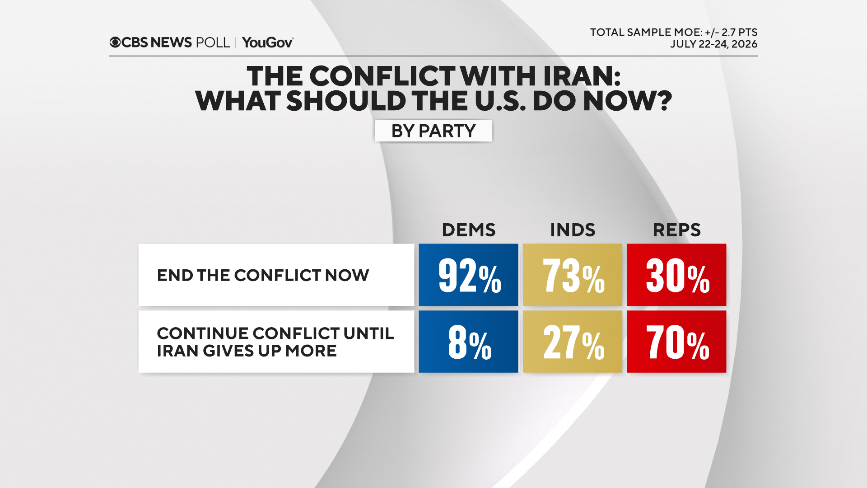
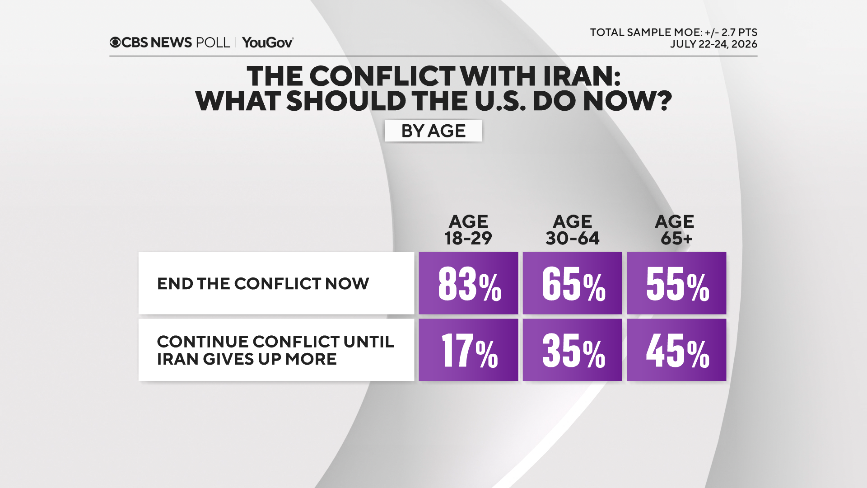
It’s also related to age: Younger people are far more apt to say the war should end than older Americans over 65.
Uncertainty and assessments
Here’s part of what drives that uncertainty:
People still don’t feel they’re getting an understanding of what’s happening day to day in the Strait of Hormuz, a feeling that has not abated over months and weeks.
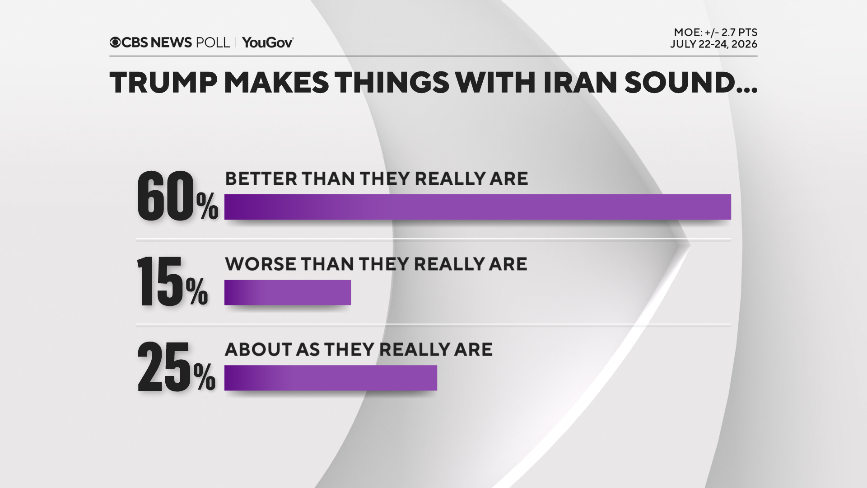
And to most, President Trump isn’t helping on that search for clarity in the public, as most feel Mr. Trump makes things sound better than they are.
On balance, perceptions of how the war is going have ticked down through the course of it.
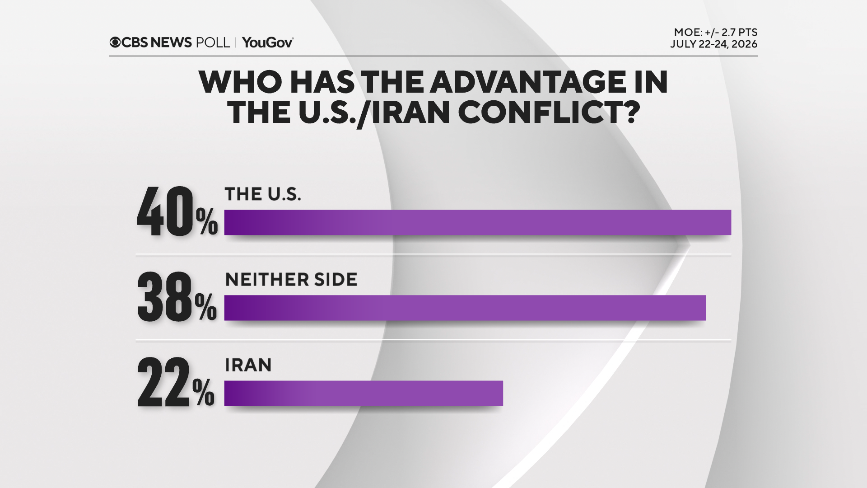
Perceptions of who has the advantage at the moment remain mixed, at best, with many still saying neither side, and a few more saying the U.S. has the advantage now than in May.
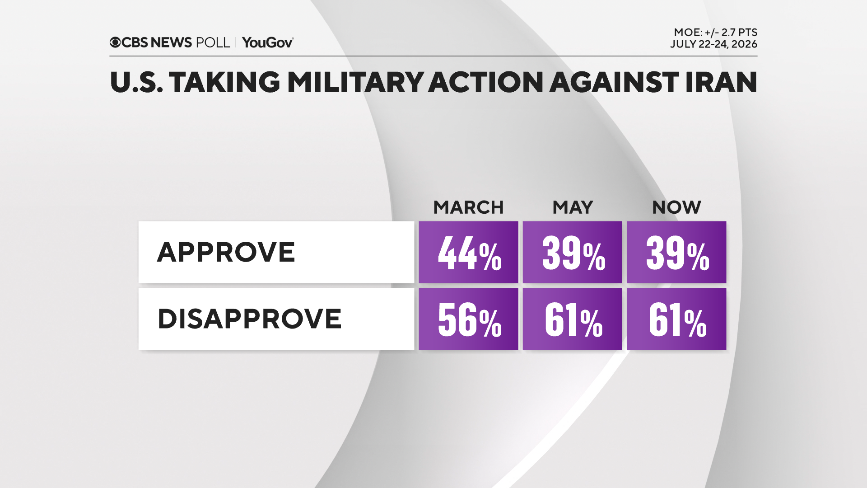
Against that backdrop, approval of the action overall remains stable, and net negative.
The situation at home
Things in the U.S. look much the same as they have lately — not a lot better and not a lot worse.
(The World Cup did, on balance, make some people feel better about the country for a while, they said.)
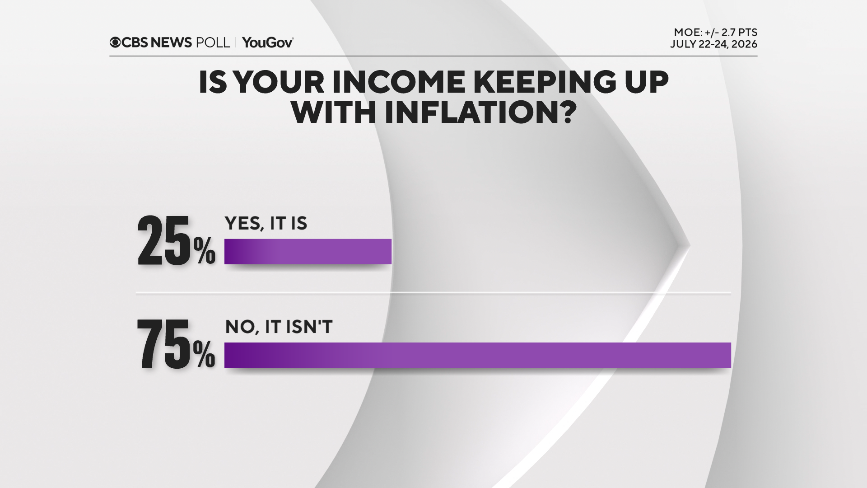
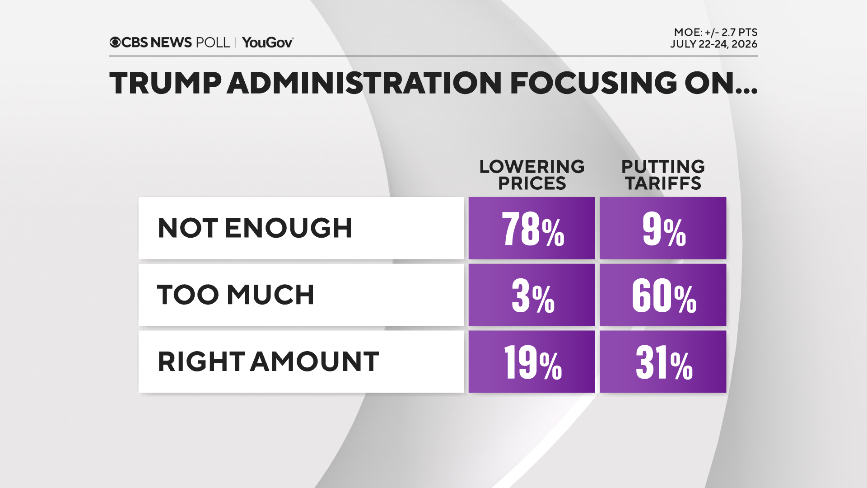
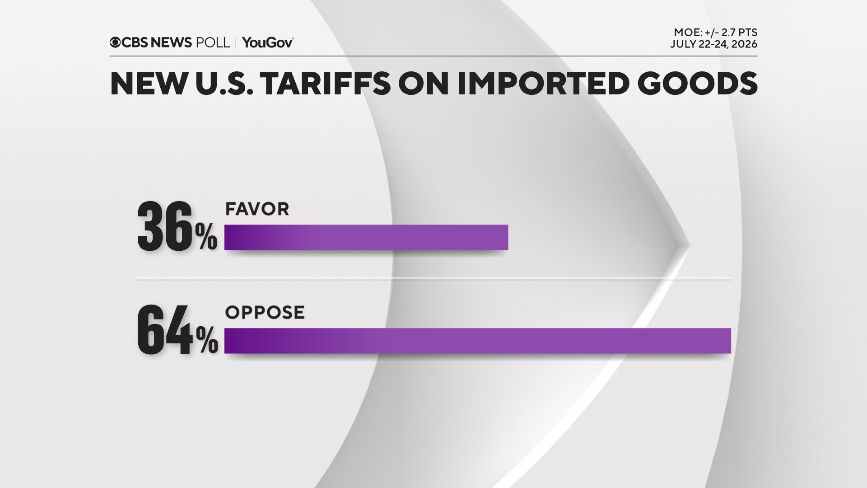
For a large majority, incomes still aren’t keeping up with inflation — and most say the president’s focus is not enough on lowering prices, and also too much on still-unpopular tariffs (and too much on making changes to buildings in D.C., too.)
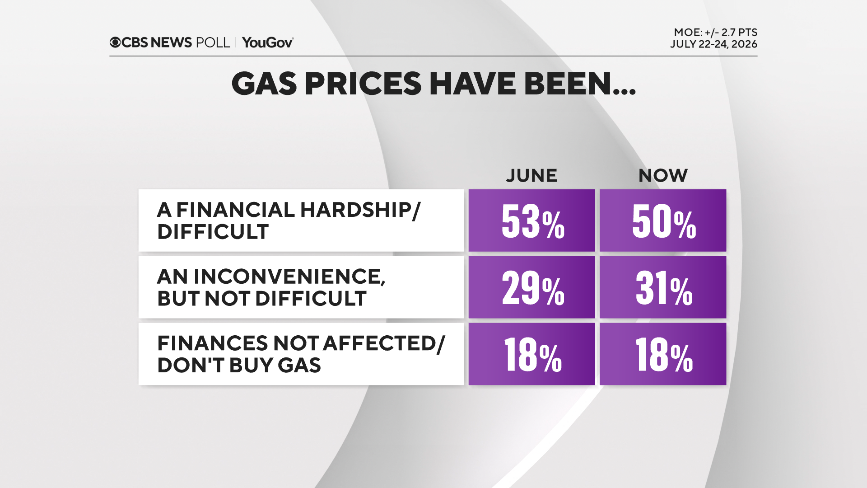
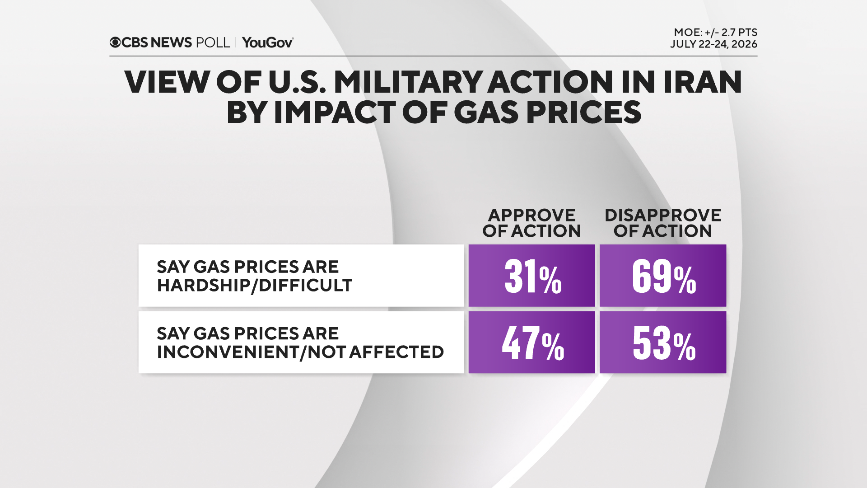
Half the country says gas prices are difficult or a hardship, though that number is a bit off its highs now. But the connection to the conflict remains, as those who are more negatively impacted especially disapprove of the military action.
Similarly, views on the economy continue to be majority bad, as they have been for many years, but they remain fairly stable over recent weeks and are off their most recent lows.
Looking ahead, those who say their income is not keeping up with inflation are overwhelmingly opposed to new tariffs.
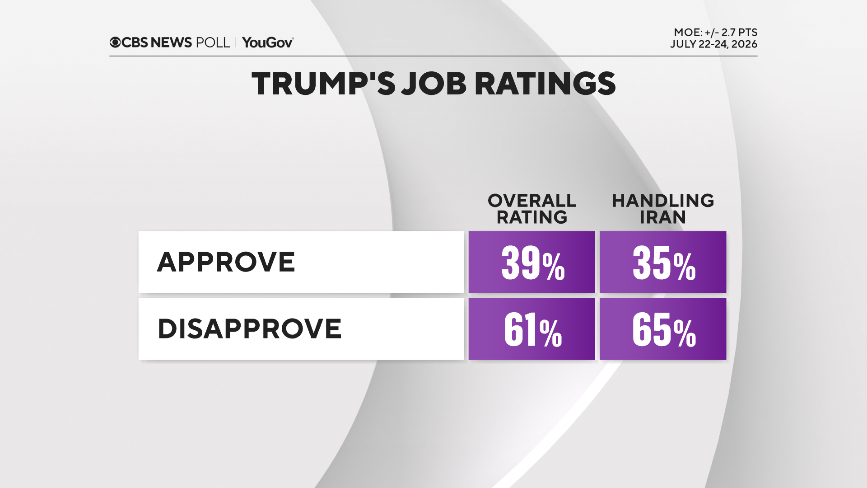
The president’s approval rating on Iran remains about where it’s been, and is still lower than his approval rating overall. That overall approval is also in the range of where it’s been for months and has ticked up a point since June.
Through it all, the public doesn’t necessarily see answers on Iran across the political aisle, either. Democrats don’t have a perceived edge on an approach to Iran in comparison with Trump and the Republicans.
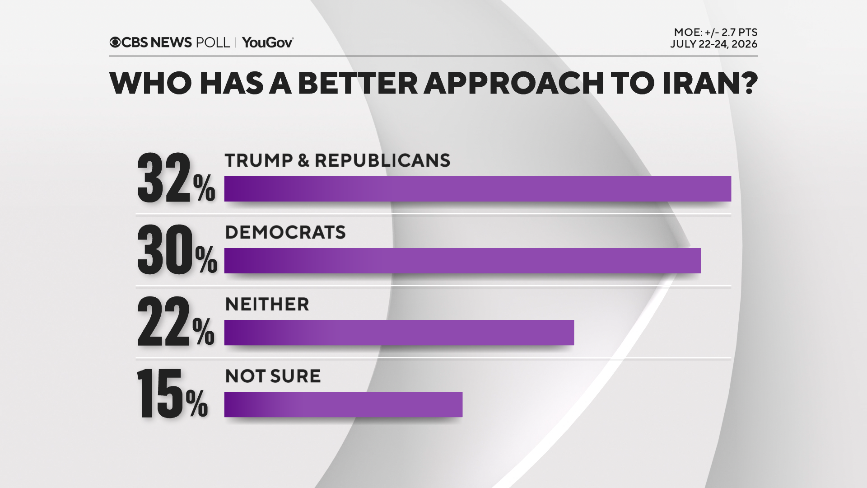
And the people who think neither side does or aren’t sure are feeling even more uncertain about the conflict than the public overall.
This CBS News/YouGov survey was conducted with a nationally representative sample of 2,193 U.S. adults interviewed between July 22-24, 2026. The sample was weighted to be representative of adults nationwide according to gender, age, race, and education, based on the U.S. Census American Community Survey and Current Population Survey, as well as 2024 presidential vote. The margin of error is ±2.7 points.


