

Americans’ incomes hit a record high in 2025. Now for the bad news.
American households earned a record median income of $87,460 last year, according to new Census Bureau data. The catch? That figure is only slightly above the previous peak set in 2019.
Adjusting for inflation, that means the typical household has gained little economic ground in six years marked by pandemic upheaval and surging consumer prices. In 2019, households had a median income of $85,320, a level that wasn’t surpassed until 2025, the Census said on Tuesday.
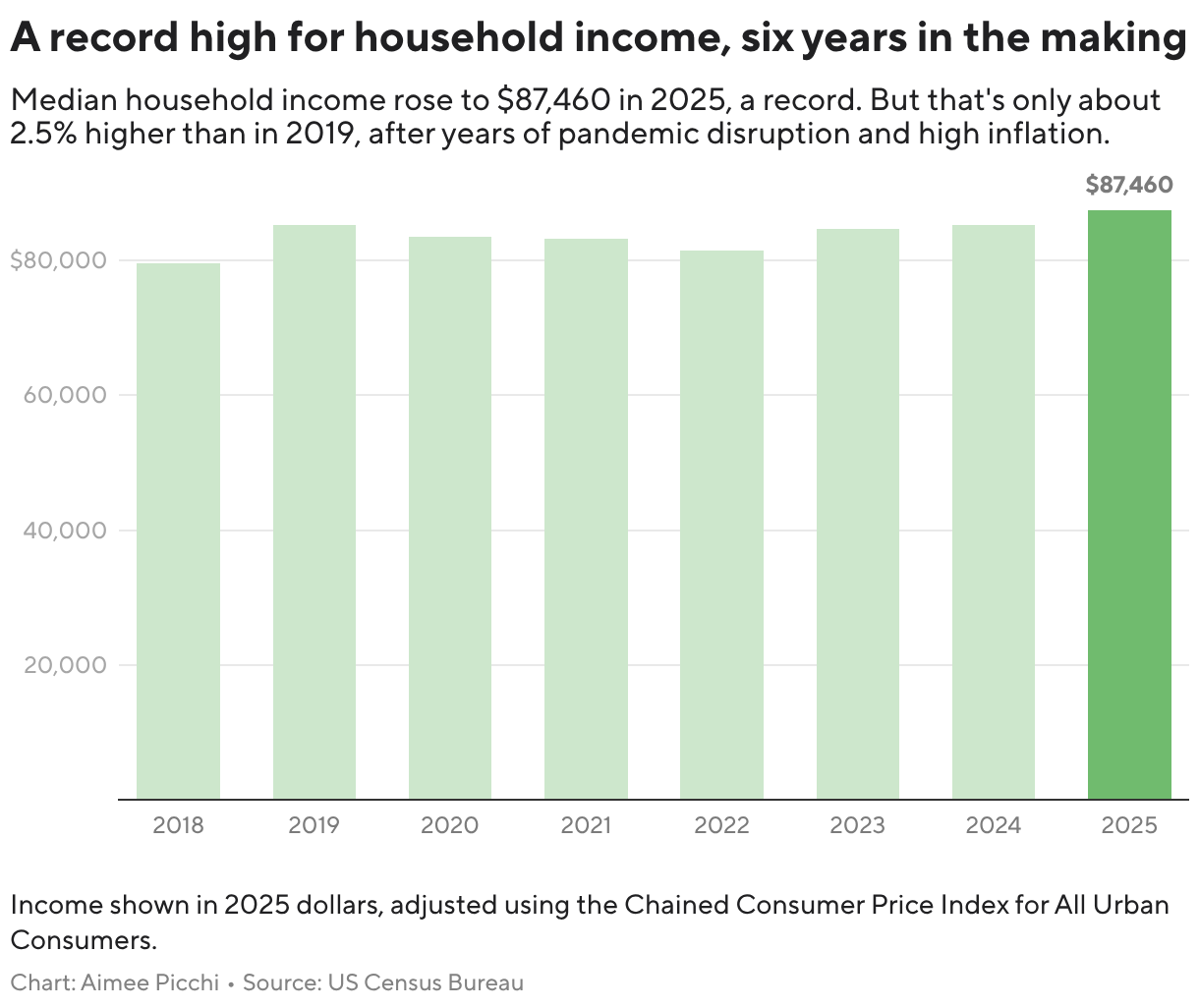
While the new data indicates that Americans’ incomes have continued to climb, it also shows that the typical household in 2025 earned only about 2.5% more than in 2019. By comparison, median household income climbed 19% during the six years before the pandemic, from 2013 to 2019.
The Census report also showed that women’s paychecks rose 3.2% last year, while men’s declined slightly. The solid gain for women narrowed the gender wage gap, though it remains large, with women earning nearly 84 cents for every dollar earned by men, up from less than 81 cents in 2024.
Declining poverty rate
The Census figures also may reflect some tax changes implemented under the “One Big Beautiful Bill” act, or OBBBA, which President Trump signed into law in July 2025. High-income households and corporations were among those that received the biggest benefits from its tax cuts, according to tax experts.
The top 10% of earners reported income growth of 1.7% last year to $261,300, while the poorest one-tenth reported a slight decline to just over $20,000, according to the Census Bureau.
“It’s notable that the median income for the top earners is increasing, while income for the lowest earners is stagnant,” said Kristin Seefeldt, associate professor of social work and public policy at the University of Michigan, in an email. “The tax code has been revised to lower marginal tax rates for everybody, and we see the top earners benefiting from that.”
Last year, the official U.S. poverty rate fell 0.5 percentage points to 10.2%. Some public policy experts cautioned that the impact from OBBBA’s cuts to social safety net programs may not appear until the Census reports on 2026 income and poverty rates, which will be released in 2027.
OBBBA instituted new restrictions to Medicaid and food stamps, with the latter program reporting a sharp decline in enrollment in 2026.
“The poverty numbers look pretty good — especially child poverty — but these numbers do not reflect cuts in benefits that started to take effect at the start of 2026,” said Amanda Nothaft, director of data and analysis at the University of Michigan’s Poverty Solutions.


