

Venice mayor proposes new dynamic-price fee for tourists which could cost up to $59
Venice’s new mayor is proposing a dynamic pricing system for the city’s access fee, under plans which would raise the charge to as much as $59 on the busiest days, in an attempt to ease overcrowding in the UNESCO world heritage city.
Mayor Simone Venturini said Friday that the current fee of approximately $11 for last-minute reservations has not done enough to discourage visitors on peak days. Instead of imposing a fixed higher fee, the city wants to enact a form of surge-pricing, allowing the charge to rise with demand on the busiest days.
Venturini said the system would both discourage overcrowding and help cover the costs of maintaining the city.
“We spend 100 million euros a year just to maintain Venice physically, and nobody gives us that money. Not Europe. Not the Italian state. International critics don’t pay it either. It’s paid by the people of Venice, and in part through tourism taxes,” said Venturini, who was elected mayor last month after serving as the city’s top tourism official when the day-tripper tax was launched in 2024.
Aleksander Kalka/NurPhoto via Getty Images 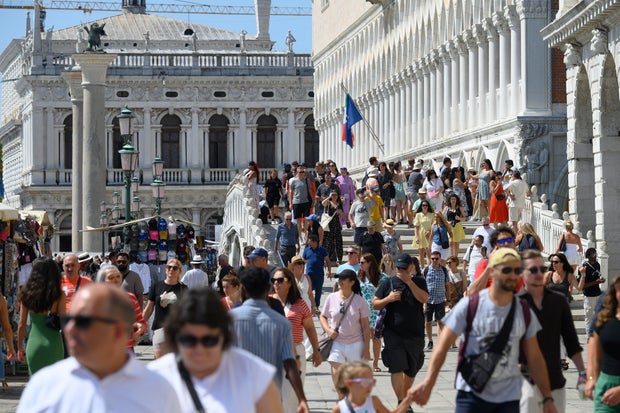
The access fee itself has been widely criticized by activists, housing advocates and opposition politicians for not doing enough to ease crowding in the city, while reducing Venice to a tourist attraction by charging admission.
Venturini said the money is necessary to clean and maintain the city. The proposal for a surge-pricing structure would require an amendment to Italy’s special law governing Venice, and Venturini said he had already discussed the idea with the tourism minister.
“Day-trippers obviously generate waste — they eat, they drink, they throw things away. That comes at a huge cost,” which he said are driven up “because everything has to be done by hand, with brooms, boats and handcarts.”
Emanuele Cremaschi / Getty Images 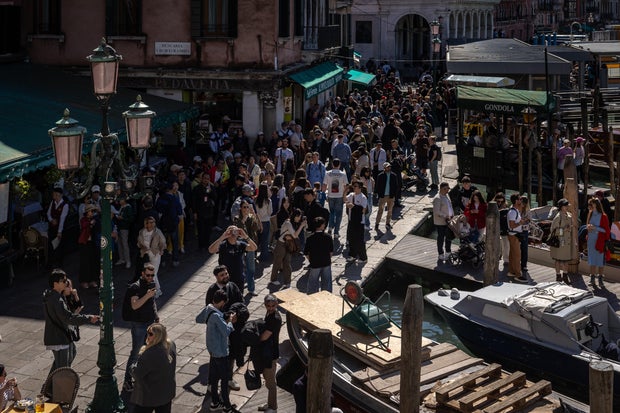
While the new price proposal has made headlines and drawn criticism for being prohibitive for many visitors, particularly families, Venturini said the amount was chosen as an upper limit, giving the city room to experiment with different pricing levels. He said they are still working with researchers to determine the right threshold.
While opposition politicians have proposed putting a cap on the number of visitors a day, Venturini said current Italian law does not allow that.
The number of residents of Venice’s canaled historic center has dropped to below 48,000 — while the number of tourist beds has risen to more than 51,500, according to the most recent figures tracked by the Ocio housing advocacy group from January.
Venturini argued that the city’s population is understated because many students and seasonal workers spend most of the year in Venice without registering as residents.


