

Parastoo Ahmadi, Iranian singer lashed for “outraging public decency,” becomes “a symbol of resistance”
Iranian singer Parastoo Ahmadi was lashed 74 times on Monday after being convicted of the crime of “outraging public decency” for performing without the head covering that is mandatory for women in the country.
Ahmadi was dealt the corporal punishment for her chosen attire during a livestreamed concert in 2024, according to her attorney, who was quoted by the reformist Iranian newspaper Etemad on Monday. But Iranian women who spoke with CBS News on Tuesday said she was punished not for breaking the rule, but for daring to publicly defy the country’s repressive regime — defiance that has made her “a symbol of resistance.”
Ahmadi’s lawyer told Etemad that the singer and four members of her production team presented themselves to provincial authorities in the holy city of Qom, as required after their sentences were upheld in September by a local criminal court.
Parastoo Ahmadi/YouTube 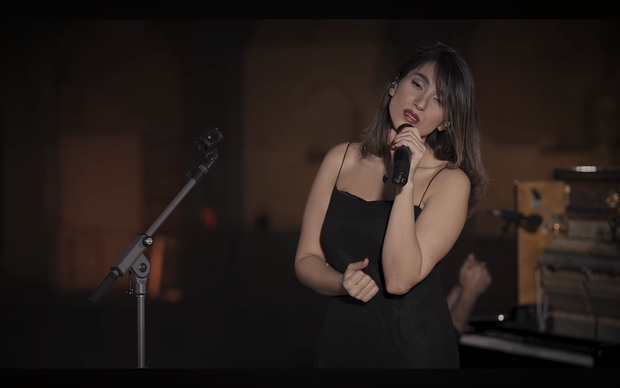
The court in Qom upheld the convictions for “outraging public decency,” citing “immoral” content posted online during Ahmadi’s performance in December 2024, which went viral in Iran.
In addition to the 74 lashes, Ahmadi and eight members of her team were also sentenced to a two-year ban on travel out of the country and a two-year ban on all “artistic activity.”
Ahmadi performed her concert in the Dayr-Gachin Caravanserai, an ancient site along the Silk Road route in Iran. It included themes of nationalism and popular uprising, and saw her openly flout both the Islamic Republic’s dress code and a long-standing ban on women singing in public.
“I feel as though I have been flogged”
Ahmadi’s punishment has reverberated across the country as her performance did two years ago.
“When it comes to her flogging, I feel deep pain,” Marjan, a 41-year-old optician from Karaj, a city northwest of Tehran, told CBS News on Tuesday. “I feel as though I have been flogged for doing what I want.”
“This is something which is much deeper than just sympathy or solidarity,” she said. “We Iranian women identify with her in a deeper psychological sense.”
Marjan, who declined to give her full name, called Ahmadi “a symbol of resistance.”
“She was an icon when she performed in that concert, and now, after she received those lashes. Both are acts of resistance,” said Marjan, who spoke with CBS News over the phone. “The regime is not afraid of women who sing, they are afraid of people who courageously carry out that which they prohibit.”
This “is not the punishment of an artist, it is the punishment of a person who made use of their most fundamental rights of freedom of speech and creative expression,” agreed Tehran resident Thoraya, 32.
“No state has ownership over the voices of their citizens. Singing is not a crime,” she told CBS News, also in a phone interview. “No state power can precondition artistic expression on political obedience. I feel solidarity with Parastoo, but it’s human solidarity first and foremost, not political.”
“I’m not taking her place or speaking for her,” she said, “but her right to wear what she wants, pursue her artistic life, is something I see as my right, too.”


