

60 Minutes Transcript: Families of U.S. military members killed in Iran war want answers from the Pentagon
There are many ways to measure the cost of the Iran war. The latest price tag from the Pentagon is $47 billion. But the war’s heaviest toll has been levied on the more than 800 American service members wounded and the families of the 23 who have died.
Tonight on 60 Minutes, our monthslong investigation reveals the extent of the damage to U.S. positions in the Middle East. You’ll also hear from Gold Star families. Their loved ones were killed in the first 24 hours of fighting when an Iranian drone struck an army command post in Kuwait. It was Iran’s deadliest strike against the U.S. military and shattered any perception that American troops were beyond the reach of an enemy, skilled in a new type of warfare.
Joey Amor: There are soldiers that are signing up now that are going to go. And they have to trust that what happened to my wife isn’t gonna happen to them.
Joey Amor’s wife, Master Sgt. Nicole Amor was one of the first six Americans to die in the war. The fallen American service members were met at Dover Air Force Base by the president and top leaders.
Norah O’Donnell: What kind of soldier was Nicole?
Joey Amor: She was proud. She was constant. She was unwavering. She was dedicated.
Master Sgt. Amor served in the Army Reserve’s 103rd Sustainment Command.
Norah O’Donnell: Tell me about her unit.
Joey Amor: I don’t have anything nice to say about the 103rd.
Norah O’Donnell: Really?
Joey Amor: I love those soldiers. And my wife loved those soldiers. But the command of the 103rd has handled this so poorly. And if I’m bein’ frank, it’s– it’s on them. They killed my wife. They killed these soldiers. And it’s not political. there are individuals in that command that made choices.
60 Minutes 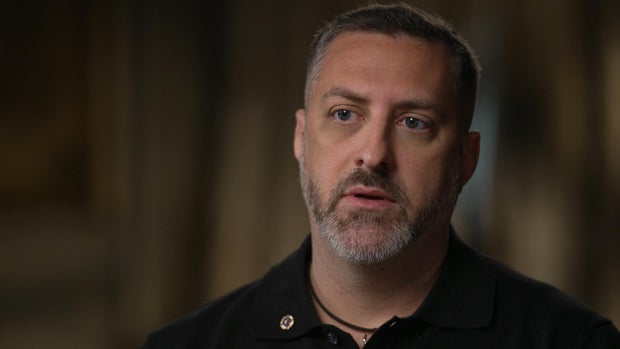
Those choices by command have been the focus of our eight-month-long investigation into the first American deaths of the war. The day after the attack, on March 2nd, Secretary of Defense Pete Hegseth insisted the troops there were well-protected.
Secretary of Defense Pete Hegseth: Every once in a while you might have one, unfortunately we call it a squirter that makes its way through. And in that particular case it happened to hit a tactical operations center that was fortified. But these are powerful weapons.
The U.S. military had built up a significant presence in the Middle East. But in the weeks leading up to the Iran war, the Pentagon moved 90% of its ground forces out of Kuwait and away from Iran, fearing retaliatory strikes. But some 70 members of the 103rd – which handles logistics – were sent closer to the threat, to this small army outpost – known as Port Shuaiba – about 65 miles from Iran.
Norah O’Donnell: How would you describe the installation at Port Shuaiba?
Major Stephen Ramsbottom: It was, some people have phrased it as a trailer park.
Major Stephen Ramsbottom was the 103rd’s deputy chief of operations and a combat veteran.
Major Stephen Ramsbottom: The protection that was there was to stop car bombs and threats like that. There was nothing there designed to protect from an aerial attack.
Iran has developed an arsenal of kamikaze drones like these and Major Ramsbottom says the threat of a drone attack was well-known. It was raised to the unit commander, Brig. Gen. Clint Barnes. And Ramsbottom says he warned Maj. Gen. John Hinson – who oversaw logistics for the U.S. Central Command.
Major Stephen Ramsbottom: I brought it up in twice in various meetings– basically saying, “Hey, I don’t see how we’re protected here.”
Norah O’Donnell: And how did your leadership respond?
Major Stephen Ramsbottom: He said we don’t have to worry about protection
Norah O’Donnell: That’s why you’re speaking up?
Major Stephen Ramsbottom: Yes that’s why I’m speaking up. I feel this is a, a tactical failure by the Army, our leadership, and myself, all the way down to my level. yes we just, we did not plan this well. And this needs to be a lesson that we learn.
Major Ramsbottom was not the only one concerned. We spoke with six soldiers who told us they had seen U.S. intelligence before the war started that put Port Shuaiba on an Iranian list of targets.
Major Stephen Ramsbottom: I saw those reports, there was definitely an X where we were.
In the week before the attack, soldiers asked for extra support.
Major Stephen Ramsbottom: That was command Sarn’t Major that chimed in with, “Hey, we’re gonna try to get this this counter drone system sent out to you.”
Norah O’Donnell: Was it ever sent?
Major Stephen Ramsbottom: No, it never arrived at Shuaiba. And we don’t know if it was ever even ordered to or requested.
60 Minutes 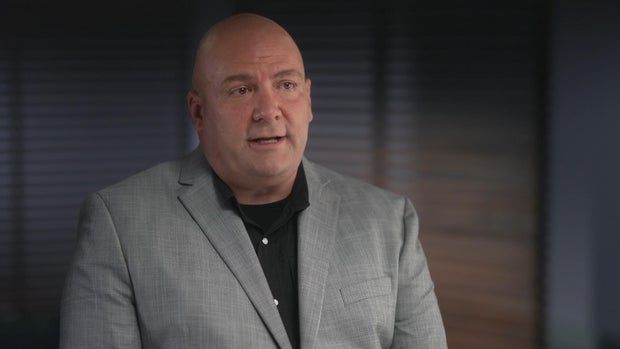
This past week, Major Ramsbottom filed this whistleblower complaint to Congress – demanding an investigation into why there was no “dedicated protection against one-way attack drones.” He also claims “the site had no physician, no fixed aid station, and only one ambulance.”
Tanner Carson: We did not have the manpower nor the equipment for any kind of a mass casualty incident.
Tanner Carson was one of two civilian medics regularly stationed at the Port. He was surprised when, in late February, he heard dozens of soldiers from the 103rd were moving in.
Norah O’Donnell: What was your concern when you heard that you would have an increase in head count?
Tanner Carson: The lack of resources, the lack of additional manpower, the lack of additional transport capability, and the fact that we did not have any kind of a supply cache on site. Like, the only medical supplies that we had were what was in my truck.
Norah O’Donnell: That’s it?
Tanner Carson: Yeah.
Carson knew Master Sgt. Nicole Amor – he told us she had specifically asked him if there was a mass casualty plan.
Tanner Carson: She wanted to know, you know, “What’s the plan if something were to happen?”
Norah O’Donnell: I mean, hearing that is kinda stunning. It’s like she was concerned.
Tanner Carson: They all were. Anybody who came and asked those same questions, it was the same answer. “I have enough here to get you to the hospital and I have enough here to keep two of you alive at most.”
The week before her death, Master Sgt. Amor told her husband that she was worried about her unit’s safety.
Joey Amor: It’s the only time in 15 years that I’ve ever heard her like that. She knew somethin’ was comin’. They all knew somethin’ was comin’.
The night the U.S. and Israel killed Iran’s supreme leader in a joint strike, Iranian quadcopter drones can be seen in this video circling above Port Shuaiba. Soldiers told us five of these drones were spotted, likely conducting surveillance.
Men and women of the 103rd were running in and out of nearby bunkers.
Around 9 a.m. the next morning, the soldiers received the all-clear and went back to their workspace. Some 30 minutes later, the Iranian drone hit.
Major Stephen Ramsbottom: I remember just getting knocked to the ground. and it was like someone came up behind me and hit me in the back of the head with a baseball bat or something. Everything just went black.
Norah O’Donnell: What structure did the drone hit?
Major Stephen Ramsbottom: It hit the center of the quadruple-wide trailer we were in
Norah O’Donnell: On target.
Major Stephen Ramsbottom: On target, yes.
New video obtained by 60 Minutes shows black smoke billowing from the command post.
Norah O’Donnell: When you got to the scene, what did you see?
Tanner Carson: A mess. I could tell the building itself wasn’t there anymore. And through the smoke you could see people laying on the ground, people carrying other bodies, people kinda limping together with one another.
60 Minutes 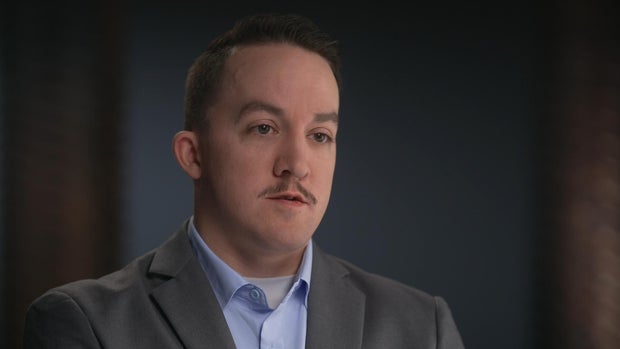
Master Sgt. Amor was still breathing when soldiers loaded her into an SUV and drove her to a local Kuwaiti hospital.
Joey Amor: They were googling hospitals to try to take some of the soldiers to. That’s absurd.
Norah O’Donnell: Do you think that if there had been a plan your wife would be alive today?
Joey Amor: I think my wife had a shot, yeah
Among the American soldiers killed were Master Sgt. Noah Tietjens and Chief Warrant Officer Robert Marzan. We spoke with Tietjens’ widow Michelle and Marzan’s widow Tina.
Norah O’Donnell: You were one of the last to be notified. Why was that?
Tina Marzan: I think the drone hit them directly. And I don’t know who knew that they were still in the building, in this metal shed that they were in. And I know they found his hat next to him.
Norah O’Donnell: They had to use DNA to identify him?
Tina Marzan: Yes, ma’am.
The attack on Port Shuaiba was one of many in the region
Our analysis of satellite imagery and new video shows the scale of destruction the Pentagon has never fully disclosed.
Since the start of the war, Iran has hit at least 31 U.S. military and diplomatic sites across eight countries, damaging hundreds of buildings and structures — from Saudi Arabia, to Kuwait, to Bahrain, where the headquarters of the U.S. Navy’s Fifth Fleet was destroyed.
Iran’s strikes have continued for months, even after President Trump declared victory on April 1.
Three months later on July 17, Iranian missiles targeted housing units on a U.S. base in Jordan, killing three more American soldiers.
When American troops are killed in action, it falls on fellow soldiers to deliver the news – like the ones who visited Tina Marzan the night after her husband died at Port Shuaiba.
Tina Marzan: And immediately when you see them standing outside, you know. I just didn’t want it to be real.
Tietjens prepared to share the news with their 13-year-old son.
Michelle Tietjens: I gathered a few items that my son would want. One of ’em was his dad’s sweatshirt that he left at home, an Army little teddy bear, and I went back to my– my– where my son was, and I had to tell him Daddy wasn’t comin’ home.
60 Minutes 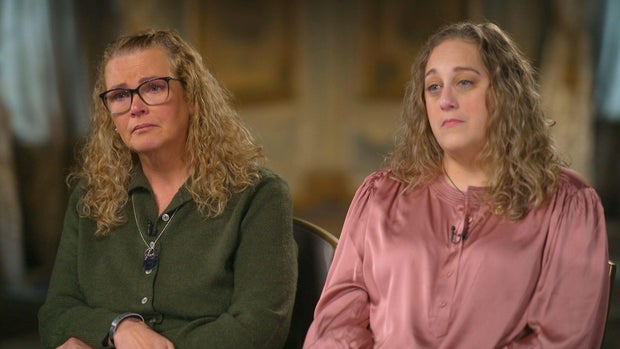
Joey Amor tried to shield their 10-year-old daughter and 18-year-old son from the two soldiers walking up his driveway.
Joey Amor: And my daughter didn’t understand. And my son said, “I know.”
Norah O’Donnell: The worst thing in your life, and then also to share it with your children.
Joey Amor: What it’s been like– for us since then has been– it’s been a nightmare. when your baseline is you wake up and you roll over and your wife’s not there, and that’s your baseline and you know that she’s never gonna be there again, and it’s not because she’s mad at you, it’s because she doesn’t exist anymore.
The Gold Star families told us they have received military honors and outreach from the Trump administration – but don’t believe they’ve gotten the full story.
Norah O’Donnell: It has been eight months since the attack. What has the Pentagon told you?
Tina Marzan: Nothing.
Norah O’Donnell: Your husband served 36 years.
Tina Marzan: Yes.
Norah O’Donnell: What does he deserve for that?
Tina Marzan: The truth. Accountability. Just own it. Say, “Something went wrong and we didn’t plan right.” That’s all that I want.
Michelle Tietjens: Yeah
The Pentagon has declined to answer whether the 103rd was denied adequate force protection. The U.S. Army finished its investigation into the attack in June. This week the families are finally being briefed on the results.
Norah O’Donnell: If the Pentagon says the U.S. military did nothing wrong and that this is the cost of war, will you accept that?
Joey Amor: No. You trust your leadership to put you in the best possible position. And my wife’s death, I already know, was preventable. I will not accept, “That’s the cost of war.”
We reached out to the two generals who allegedly ignored warnings about drone attacks, Maj. Gen. John Hinson and Brig. Gen. Clint Barnes. Neither responded. Yesterday, Army officials briefed Michelle Tietjens on the results of its Port Ahuaiba investigation – she told us they did not acknowledge any mistakes.
Produced by Michael Kaplan and Jonah P. Kaplan. Field producer, Julie Morse. Associate producer, Callie Teitelbaum. Broadcast associates, Gianna Totani and Paloma Vigil. Edited by Thomas Xenakis. Thanks to: Rhona Tarrant and James LaPorta.


