
Financial security among U.S. workers slumps to lowest level in 7 years, survey says
Rising financial strains on American workers are forcing them to make painful trade-offs, such as skipping medical care, to make ends meet, new research shows.
Financial security among U.S. employees dropped from 46% to 36% in 2026, its lowest level in seven years, according to a survey of 6,000 U.S. employees by benefits company Willis Towers Watson (WTW).
While workers report feeling better physically and say their social connections have improved, their sense of well-being has moved in the opposite direction regarding money matters, the firm said.
Barriers to healthcare
Financial pressures are also changing employees’ attitudes toward seeking healthcare, shaping their views on retirement and affecting their performance at work, the survey found. Across all age groups, about one-third of employees say they put off or skipped a medical or dental appointment in the past year because of concerns over cost, and despite having health insurance, respondents told WTW.
“They feel the cost of healthcare is huge and are facing high deductibles and high out-of-pocket costs,” Courtney Stubblefield, a WTW health and benefits practice leader, told CBS News. “Those kinds of features are becoming barriers to them getting the care they need.”
Among different age groups, employees in their 40s reported feeling the least financially secure, according to the survey. Just 30% of workers in their 40s reported feeling financially secure, compared to half of workers 60 and over. More than 40% of people in their 40s said they delayed or skipped receiving medical care over money worries — the highest share among all age groups.
Mid-career workers often balance multiple responsibilities, including caring for both children and aging parents, Stubblefield said.
“These people are more likely to have kids and family healthcare coverage, so it costs more,” she said. “They’re also part of what we call the sandwich generation, so they have kids in school or approaching college and are also caring for elderly parents. They have peak levels of obligation in that decade.”
Fading retirement dreams
Roughly two in three employees expect to be worse off in retirement than their parents’ generation, citing healthcare costs as a barrier to saving for retirement, respondents told WTW.
Separate research from Prudential Financial recently found that more than six in 10 retirees with at least $500,000 in investable assets do not feel comfortable spending money for enjoyment. Many cite inflation, the rising cost of living, and healthcare costs as barriers to spending on entertainment in retirement.
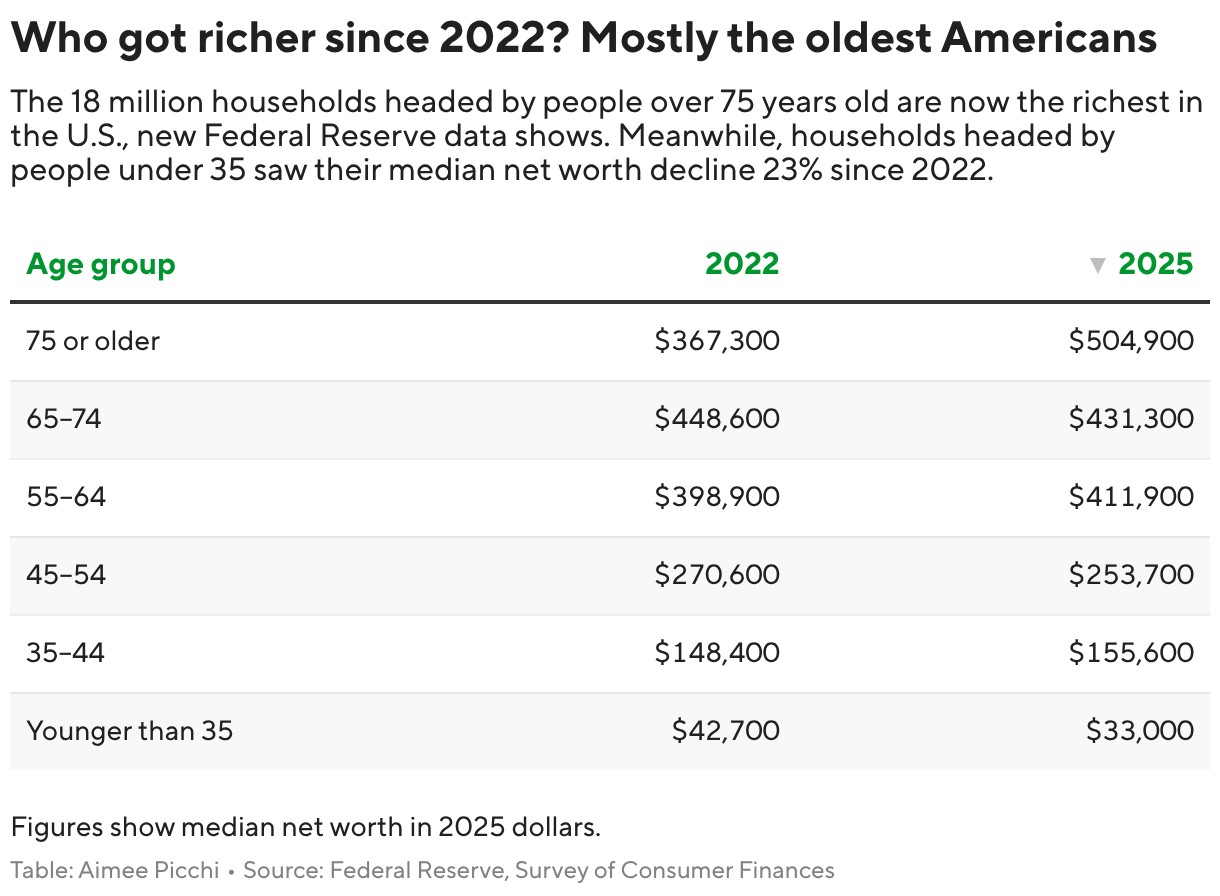
Many older Americans are doing comparatively better than younger people. The 18 million households headed by someone 75 or older have the highest median net worth of any age group nationwide, according to Federal Reserve data. Americans in that demographic had a median net worth of $504,000 in 2025.
Between 2022 and 2025, households headed by 65- to 74-year-olds saw their wealth increase by 37%, the Fed concluded.