

AI is being taught how to do your job. Will artificial intelligence replace us, or just change the way we work?
Music producer Robbie Hiser is confident there will always be a place for creatives like him even though he taught artificial intelligence some of the tricks of his trade.
Hiser trained AI for Mercor, a company that works to make AI models like ChatGPT or Claude better in a wide variety of subjects from finance to poetry. The multibillion-dollar company has assembled more than 100,000 freelancers in a wide range of industries, available to teach AI what they know about their fields.
But Hiser and other trainers said they don’t believe they’re training themselves out of a job. Hiser thinks creative work like great songwriting, for example, will always require a human touch.
“AI doesn’t have any life experience to pull from,” he said. “An AI never had a girlfriend break up with it.”
Still, nearly three-fourths of Americans now fear AI is coming for our jobs, according to a Pew Research study. And a September report from McKinsey Global Institute found AI could force 11 million U.S. workers into new careers by 2035.
CBS News 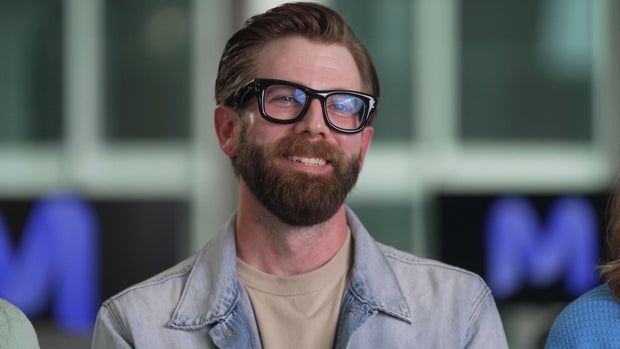
A natural evolution?
Mercor CEO Brendan Foody sees the changes prompted by AI as a natural evolution. He believes with the use of AI, people will be freed from the dull, repetitive parts of their job, leaving them with more time to do other more meaningful and engaging work.
The evolution is happening across the country. Columbus, Ohio, law firm Vorys, Sater, Seymour and Pease, for instance, worked with Stanford University’s Liftlab to build AI personas trained on the experience and philosophy of some of its senior lawyers. These AI personas can offer feedback from the unique perspective of individual Vorys partners on documents, trial lawyer and partner Kim Herlihy said.
“AI is never going to walk into the courtroom and give an opening statement to the jury,” she said. “But it helps us have additional tools to use as we prepare that opening statement.”
CBS News 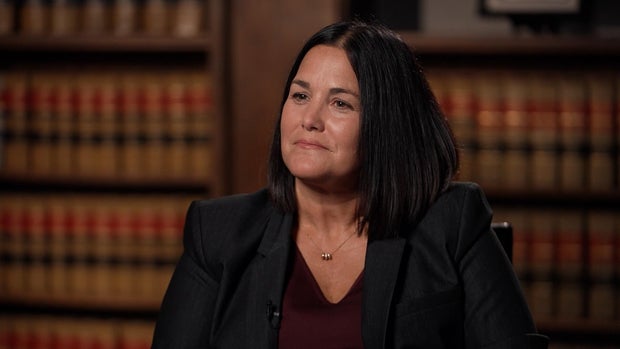
The AI may have Herlihy’s expertise, but she said it’s designed for optimization, not replacement.
“AI cannot take the place of what’s a fundamentally human business,” she said. “You call your lawyer because you want to look in their eye and say, ‘What should I do about this issue?'”
AI training is currently America’s fourth-fastest-growing job category on LinkedIn. At the moment, the gig work training AI at Mercor can pay $20 or even $200 an hour. To Foody, it’s the career of the future.
What a top economist says
Foody’s sunny picture is at odds with what Nobel Prize-winning economist Daron Acemoglu fears could be coming for American workers. On its current trajectory, many areas are set to become more automated, leading to worker displacement.
“What we are living through with AI is unprecedented,” said Acemoglu. “The first phase of the Industrial Revolution took 80 years. Today it’s taking place in one or two years and it’s taking place across many different sectors at the same time.”
In a worst-case scenario, unemployment could triple in the next decade, if nothing is done and the U.S. continues on its current course, Acemoglu said.
And while Acemoglu acknowledged there will be employment for people training AI, he said, “The number of people they’re employing in these positions is small relative to the number of people who will be replaced.”
“I mean, that’s the whole point of automation,” Acemoglu said.
Who will be impacted as AI advances?
While unemployment is generally steady at the moment, research from Stanford shows hiring is down for young people in the most AI-exposed jobs — like software developers. Research from the U.S. Census, found hiring and wages among recent college grads in AI-exposed majors have declined due to AI.
Clara Shih, who oversaw major AI divisions at Salesforce and then Meta, said at her workplace there used to be dozens of people involved in conceiving a product, creating a prototype and ultimately delivering it to customers. Now, she said, the same task can be done with just a few people using AI agents.
CBS News 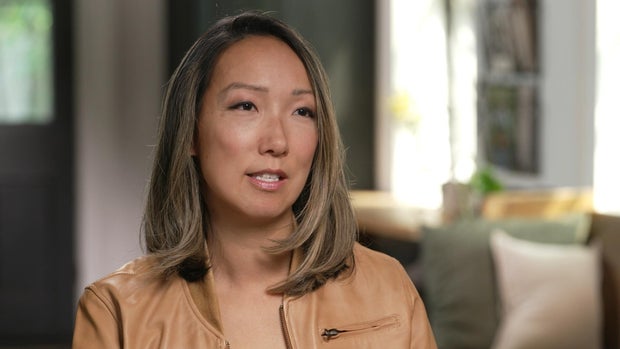
Shih was so alarmed by what this meant for the future of work that she quit her tech job in January and started a nonprofit helping young workers, who’ve been among the hardest hit, navigate the new economy.
“Traditionally, the tasks that you might assign to a young person, maybe doing some market research or creating the first draft of a memo, AI is just really good at doing those now,” Shih said.
Shih believes AI could ultimately affect workers across every profession, impacting more than just workers’ livelihoods.
“It’s never just about the jobs. It’s people’s sense of self-worth. It’s the fracturing of communities,” Shih said.
What can be done?
Shih witnessed the decline of factory work when her family moved from Hong Kong to Ohio. She sees clear parallels between the impacts of globalization and automation and what AI could mean for the white-collar workforce
“I think what we can learn is that first we have to be honest with people about what the risks are,” Shih said. “I think, you know, sugarcoating that this AI utopia, maybe we’ll get there, but there’s a lot of hurt that could happen between now and there.”
For Acemoglu, it’s not about saying no to technology.
“Absolutely not. But in every technological revolution there is pushback, and that pushback takes many different forms,” he said.
Acemoglu said there is a lot that can be done to ensure AI doesn’t lead to mass unemployment — companies could intentionally design AI to make humans better, not expendable, or the government could implement a tax code that incentivizes companies to hire real people.
But the window to act is closing.
“It should move us into thinking about what we can do because there is a lot we can do,” Acemoglu said. “Because the future is so uncertain, because the future is so much subject to our choice and agency, it is all the more important that we have this discussion.”
Read the full transcript of the segment.


