

The New York Film Festival returns with films about obsession, deception and monsters. Here’s a preview.
The 64th New York Film Festival, one of the world’s most prestigious cinema events, opens Friday with the first of more than 70 fiction features and documentaries making their world or U.S. premieres, starring such luminaries as Pedro Pascal, Adam Driver, Scarlett Johansson, Julianne Moore, and Godzilla.
This year’s festival, which runs through October 12, showcases short film programs, revivals, and filmmaker talks, in screenings held in all five of the city’s boroughs.
The following are some of the most notable and intriguing films making their bows before opening in theaters or streaming in the coming months.
Documentaries
New York Film Festival; A24; Cinetic; Mubi 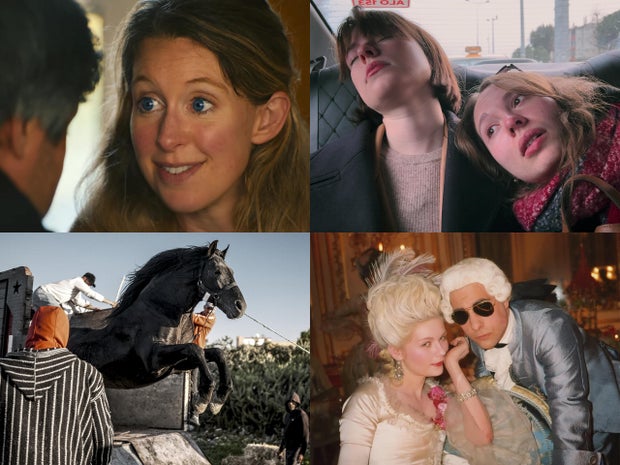
This year’s lineup includes non-fiction films with a lot of buzz. In “You Can See Everything,” whose world premiere was a surprise at the Telluride Film Festival earlier this month, Nathan Fielder (“Nathan for You,” “The Rehearsal”) moved into the home of disgraced Theranos founder Elizabeth Holmes and her partner in the days prior to the start of Holmes’ 11-year prison sentence for fraud. With co-director Lance Oppenheim, Fielder engaged in conversations with Holmes aimed at revealing her motivations. (N.Y. premiere; Sept. 30).
Julia Loktev’s “My Undesirable Friends: Part II – Exile,” a sequel to her acclaimed 2024 fly-on-the-wall account of independent media in Moscow reporting on the Putin regime, follows journalists as they are forced into exile after Russia’s invasion of Ukraine, and the Kremlin’s ramped-up censorship and arrests over reporting on the war. (N.Y. premiere; Sept. 27.)
Among the most anticipated is “NAZA,” (North American premiere; Sept. 26, 27) in which its directors said they spoke with dozens of sources inside the Israeli military and intelligence services who allege that the systematic use of AI-powered targeting contributed to potential human rights abuses against Palestinians in Gaza. “NAZA,” whose title refers to collateral damage, was directed by Yuval Abraham and Rachel Szor (whose previous film “No Other Land” won the Academy Award). The film, which won the Special Jury Prize at the Venice Film Festival, has been widely criticized by the Israeli government, which said in a statement that it “categorically rejects” the allegations and raised concerns about the film’s use of anonymous sources. The Israel Defense Forces has repeatedly denied allegations that it intentionally targets civilians in Palestinian territories. In response to “NAZA,” Israel’s culture minister has also called for revoking the citizenship of the two Israeli directors.
A follow-up to her 2016 documentary “13th” about the ramifications of the 13th Amendment on mass incarceration, “14th,” by Ava DuVernay, examines how the 14th Amendment’s protections of citizenship and due process, as well as safeguards against insurrection, are under attack today (World premiere; Oct. 9, 11).
“Making Marie Antoinette,” a video diary shot by Eleanor Coppola during the making of daughter Sofia Coppola’s 2006 period drama, was completed by Sofia after Eleanor died in 2024. It is narrated by Diane Lane. (N.Y. premiere; Sept. 29, 30, Oct. 1, 11.)
Paul Thomas Anderson (an Oscar winner for last year’s “One Battle After Another”) shot the music documentary “Cameron Winter at Carnegie Hall” on 16mm and 35mm, in which the Brooklyn musician and frontman of Geese performed an acoustic set on the world’s most famous concert stage. The film debuts Oct. 1, 2 and 9, before going “on tour” across the U.S.
Jonathan Glazer (“The Zone of Interest”) enlisted London schoolchildren to shoot video of recording sessions at Abbey Road Studios for a charity album created to aid children in conflict zones. “Joy of Joys” parallels the young documentarians’ output with that of young people in Gaza, Sudan, Ukraine and Yemen who were similarly handed cameras to document their lives. (World premiere; Sept. 30, Oct. 1, 2, 12.)
Other documentaries range in topics from student artists at the National Institute for Blind Youth in Paris (“For the Moon,” world premiere; Oct. 6, 7), to Tala Hadid’s “Bardi” (world premiere; Oct. 1, 2, 4), which captures the lives of equestrians in central Morocco; to “Hanabi” (North American premiere; Oct. 8, 9), Ana Vaz’s visual essay about ecological disasters – natural and manmade – affecting Japan.
Profiles include “Edward Said: Between Worlds,” about the late Palestinian American professor and writer (U.S. premiere; Sept. 30, Oct. 1, 2); and Argentinean filmmaker Mariano Llinás’ “Life of Jorge Luis Borges,” which explores the Argentine writer and his impact on politics and culture (U.S. premiere; Sept. 26, 28).
In “Once Upon a Time in Harlem,” David Greaves completes the film his father William had begun in 1972, to document the living practitioners of the Harlem Renaissance (N.Y. premiere; Sept. 29, 30, Oct. 4).
World premieres
New York Film Festival; Searchlight Pictures; Neon; GKIDS 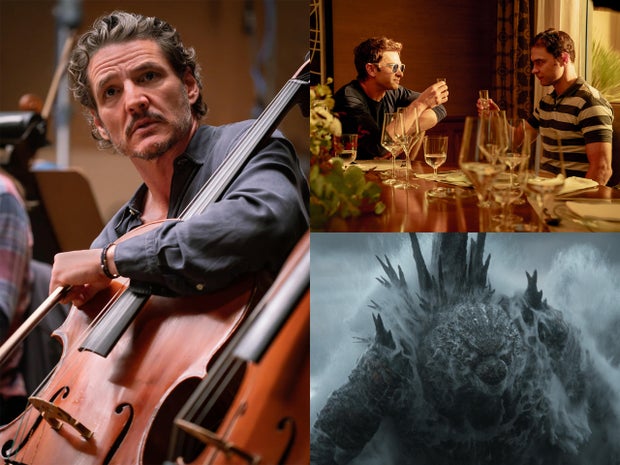
Among the festival’s fiction films making their world premieres is “Behemoth!” starring Pedro Pascal as a former child prodigy and orchestral cellist trying to resolve his fractured life while working as a session player recording Hollywood film scores. From writer-director Tony Gilroy (“Michael Clayton,” “Andor”) (Oct. 2, 3, 6, 7, 9, 11).
In “Artificial,” director Luca Guadagnino (“Call Me By Your Name”) presents a comic-drama about the burgeoning artificial intelligence industry, from Soviet-born computer scientist Ilya Sutskever’s studies in Canada under Geoffrey Hinton, to his encounter a decade later with Sam Altman, who would co-found OpenAI. Starring Andrew Garfield, Mark Rylance, Yura Borisov, and Monica Barbaro, with a screenplay by “SNL” writer Simon Rich. (Oct. 5, 6.)
Tom McCarthy, director of the Oscar-winning “Spotlight,” presents “A Statement,” which recreates a 1980 meeting of environmental activists, policy makers and scientists trying to reach a consensus on the increasingly alarming data about climate change. The cast includes Paul Giamatti, Evan Peters, Paul Rudd, Amy Ryan and John Turturro. (Oct. 3, 4, 6, 11.)
And the gargantuan “Godzilla Minus Zero,” from director Takashi Yamazaki, stomps into Alice Tully Hall on Sept. 26.
U.S. and N.Y. premieres
The festival’s gala opening night feature is James Gray’s thriller “Paper Tiger,” a potent familiar drama (and one that is semi-autobiographical) starring Adam Driver, Miles Teller and Scarlett Johansson, about a former NYPD street cop who has hooked up with the Russian mob, and a brother who brings the unhelpful trait of naïveté to Russian gangsters (North American premiere; Sept. 25).
Sandra Hüller, an Oscar nominee for “Anatomy of a Fall,” stars in two New York premieres: “Rose,” for which she won best actress at the Berlin International Film Festival, playing a woman who garnered independence for herself in 17th-century Germany by disguising herself as a man – a ruse that took her from the battlefield to an arranged marriage (Sept. 26, 27, Oct. 1, 4); and “Fatherland,” as the daughter of famed German novelist Thomas Mann, who accompanies her father on a return to Germany after World War II, where the acrimony about questionable allegiances is still fresh. Directed by Paweł Pawlikowski (“Cold War,” “Ida”), who earned the best director prize at Cannes (Oct. 4, 5, 6, 7).
Cristian Mungiu (“4 Months, 3 Weeks and 2 Days”) won the top prize at Cannes this year with his film “Fjord,” starring Sebastian Stan and Renate Reinsve as Pentecostal Romanian immigrants in Norway who fall under suspicion of abusing their children (U.S. premiere; Oct. 4, 5, 7).
Directed by comedian Chris Rock, “Misty Green” (U.S. premiere; Sept. 26, 27, 30, Oct. 2, 4) stars Rosalind Eleazar (“Slow Horses”) as an actress trying to regain both employment and dignity in a hostile Hollywood. The cast also includes Adam Driver, Daniel Kaluuya, Anna Kendrick, Anthony Anderson, and Rock as a director who may be the key to Misty’s way back.
Many international filmmakers are bringing their latest works to New York. Werner Herzog, whose “Fitzcarraldo” closed the 1982 festival, bows “Bucking Fastard,” starring Kate and Rooney Mara as sisters whose individual lives are so intertwined they speak (and do pretty much everything else) in unison. (Sept. 30, Oct. 8, 10, 12.)
Neon; A24; Mubi; Sony Pictures Classics; New York Film Festival 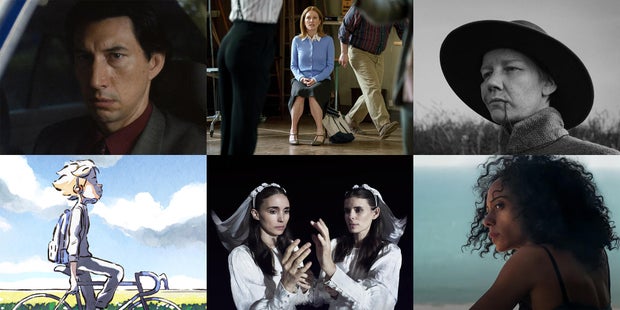
In a matryoshka doll of a film, Pedro Almodóvar’s “Bitter Christmas” stars Barbara Lennie as an actress and director writing a screenplay inspired by her friends – and who herself is a fictional creation by another filmmaker (U.S. premiere; Oct. 6, 7, 8, 10, 12).
Mike Leigh’s “Tender Loving Care” is an emotional and humorous portrait of Brits navigating their lives post-Brexit (Sept. 28, 29, Oct. 6, 8, 12).
Ryûsuke Hamaguchi, director of the Oscar-winning “Drive My Car,” returns with “All of a Sudden,” in which the new director of a facility for the elderly in Paris teams up with a theater director from Japan to introduce a new program of care. Virginie Efira and Tao Okamoto shared the best actress award at Cannes (U.S. premiere; Oct. 1, 2, 4, 9).
Nicolás Pereda’s absurdist comedy “Everything Else Is Noise” (U.S. premiere; Sept. 26, 27, Oct. 4, 5), is about a family of musicians who open their home to a TV camera crew.
From Pixar veteran Louis Clichy comes “Iron Boy” (Sept. 26, 28), an animated coming-of-age tale set in rural France, which won the Un Certain Regard Special Jury Prize at Cannes.
Julianne Moore is a suburban housewife and mother who breaks out of her routine by auditioning for a community theater production, nabbing a role no one else wants, in “The Debut,” the latest comedy from writer-director Jesse Eisenberg (“A Real Pain”), with Paul Giamatti. (N.Y. premiere; Oct. 7, 8, 10).
In the darkly humorous political thriller “Minotaur,” by exiled Russian filmmaker Andrey Zvyagintsev (“Leviathan”), a Russian businessman who suspects his wife has been unfaithful is tasked with choosing which of his employees are to be drafted to fight in the Ukraine war. Adapted from Claude Chabrol’s “La Femme infidèle,” “Minotaur” won the Grand Prix at Cannes (N.Y. premiere; Oct. 3, 5, 8).
In Emmanuel Marre’s “A Man of His Time,” Swann Arlaud (“Anatomy of a Fall”) stars as a bureaucrat in Vichy France whose eyes are opened about his government’s collaboration with the Nazis. Winner of best screenplay at the Cannes Film Festival (North American premiere; Oct. 6, 7, 10).
In the comedy “Club Kid,” director Jonathan Firstman stars as Peter, a gay club promoter who learns he’d actually fathered a child 10 years earlier, when the young lad shows up on his doorstep (N.Y. premiere; Oct. 3, 4, 5, 7, 12).
Arie and Chuko Esiri’s “Clarissa” adapts Virginia Woolf’s “Mrs. Dalloway” to present-day Nigeria (U.S. premiere; Oct. 4, 5, 7, 10). In “Dao,” French Senegalese filmmaker Alain Gomis intercuts between a wedding in Paris and a memorial in Guinea-Bissau (North American premiere; Oct. 4, 5, 6, 11).
In Valeska Grisebach’s “The Dreamed Adventure,” an archaeologist in Bulgaria digs for answers surrounding her missing former lover. Winner of the Cannes Jury Prize (U.S. premiere; Oct. 5, 7, 8, 10).
Austrian director Sandra Wollner explores dimensions of grief after a Berlin family is affected by a horrific accident in “Everytime” (U.S. premiere; Sept. 29, 30, Oct. 3, 6, 8, 11).
In director-writer-cinematographer Marine Atlan’s feature debut, a teacher leads a cohort of French high school students on a trip to Italy, with revelatory consequences, in “La Gradiva” (U.S. premiere; Sept. 27, 28, 29, Oct. 9, 12).
A quasi-documentary/fiction film, “The Loneliest Man in Town” features Austrian blues musician Al Cook playing Al Cook, an Austrian blues musician. (North American premiere; Oct. 1, 2, 11).
Tallie Medel plays a neurotic social worker trying to resolve her own unspeakable issues of the past in Dan Sallitt’s “What Can’t Be Mentioned” (World premiere; Oct. 3, 4, 5, 6, 12).
Revivals and restorations
New York Film Festival; Walt Disney Company; Warner Brothers Clockwork 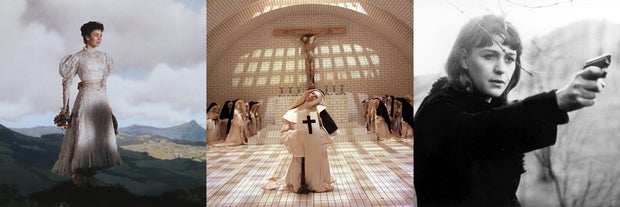
British director Ken Russell, as was his habit, courted controversy with his profoundly political 1971 film “The Devils,” based on the Aldous Huxley novel and set in 17th century France, about a libidinous priest charged with heresy and an order of nuns seemingly possessed by demons. Vanessa Redgrave and Oliver Reed gave gutsy performances, and Derek Jarman’s sets are superb, but the film was censored in its original release, in both the U.S. and U.K. Now, Russell’s cut has been restored from the original negatives, and is being screened in 35mm (Sept. 26).
Michael Powell and Emeric Pressburger’s 1950 Technicolor drama “Gone to Earth,” starring Jennifer Jones, which was drastically cut by producer David O. Selznick before releasing it under a different title, has been restored by Martin Scorsese and Powell’s widow, Thelma Schoonmaker (Oct. 3, 4, 6, 10).
The festival features revivals of “The Drift,” French director Paula Delsol’s 1964 New Wave feature about a woman’s encounters with a string of men, starring Jacqueline Vandal (Sept. 26, 27, Oct. 1); “Yesterday Girl,” Alexander Kluge’s radical 1966 drama of a young East German woman transitioning to life in West Germany (Sept. 28, Oct. 4, 5); and Barbara Hammer’s provocative 1992 documentary, “Nitrate Kisses,” which explores representations of homosexuals in films and the emergence of queer cinema (Oct. 3, 5); and from 1976, Luchino Visconti’s final film, “L’innocente,” starring Laura Antonelli, Giancarlo Giannini and Jennifer O’Neill, in a period film about an aristocracy riven with marital affairs (Oct. 3, 6, 7, 9).
Talks and roundtables
Conversations with filmmakers include talks with James Gray and Jim Jarmusch (Sept. 26); Mike Leigh (Sept. 29); Kleber Mendonça Filho (Oct. 2); Ryûsuke Hamaguchi (Oct. 3); Pedro Almodovar and Sofia Coppola (Oct. 5); and Ava DuVernay (Oct. 8).
Visit the New York Film Festival website for more information on the lineup of films, short film programs, screening schedules, free talks, and ticket availability (including rush and standby tickets).


